Gathering or Pleating the fabric .
Before Smocking Pleaters were around, the preparation to smock the fabric was done by hand.
"Priscilla Smocking Book" Circa 1925
This little book shows a few different ways this was accomplished.
Click on photo for a close up view. Photos are from the vintage book.
Reading this information about fabric used for Smocking, it seems unlimited. The problem with some of those same fabrics today is that we expect them to go through the
Smocking Pleater.
Pleaters are expensive and everyone does not own one so these methods can actually be used today in the same way our Great Grandmothers used them.
A strong thread is used to pick up bits of the fabric evenly across the rows. Getting the rows even is very important. They have stitched machine threads to be used as a guide to help keep the hand stitched pleating lines straight. Those threads would be removed after the pleating rows were stitched.
Today we also have Stamp on Dots that can be used as a way to evenly pick up the fabric to form the pleats.
You iron the dots onto the fabric to transfer them, then you pick up the dots with needle and thread. This is an evenly spaced guide for picking up the pleats by hand.
I can see why so many of the old Smocked Dresses were Dimity or checked fabric. It made it much easier gathering the fabric. You cannot just machine gather the fabric, which I know is your first thought. The stitches have to line up vertically as shown in the above pictures. It would be impossible on a sewing machine.
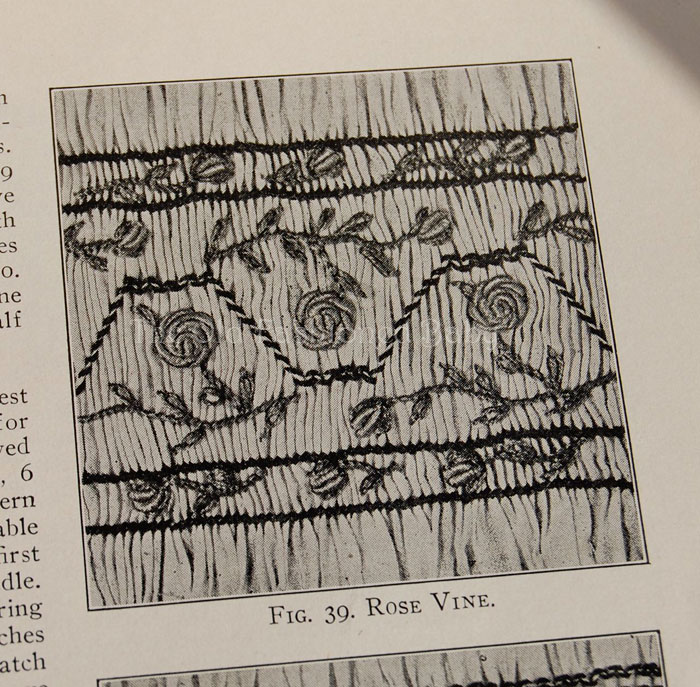
Here you see the pleated or gathered fabric. I think Pleated is the better term. The fabric is gathered into even pleats that are now ready to smock.
Are you thinking..."Wow, all that work and they haven't even started Smocking!!"
That's why we were born after our Grandmothers.
So we can use a Smocking Pleater to pleat our fabric.
Here you see a Smocking Pleater in the process of pleating a piece of fabric.
I may be old fashioned but I can appreciate progress in this instance!!
All Designs Are Copyright Protected copyright 2011 Jeannie Baumeister